
Clear Pee Is Fine, Unless It's Every Time
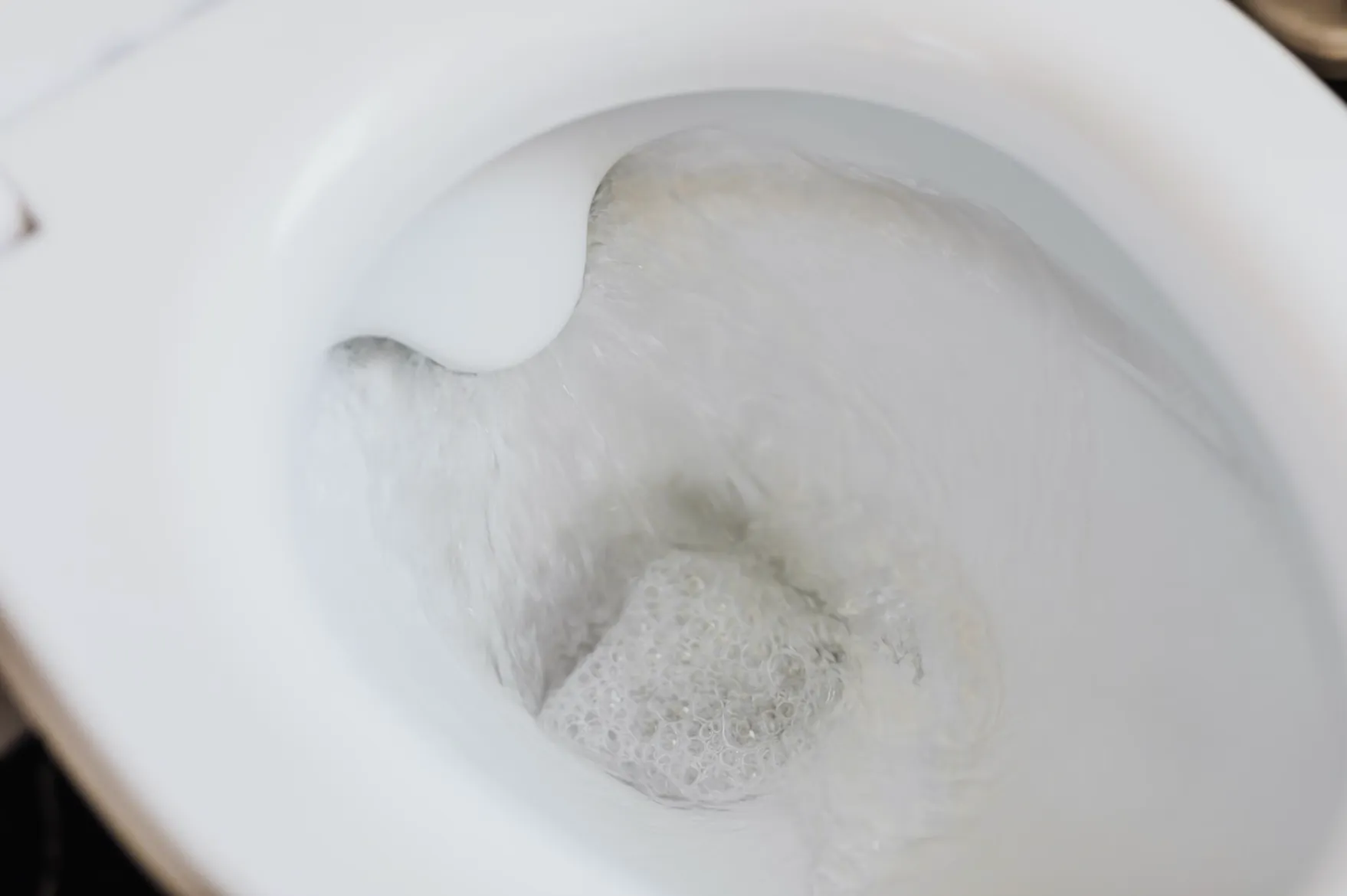
Clear urine usually just means you're well-hydrated. But if it's clear every single time, no matter what, that's worth a call to your doctor.
Written by
Jeff Grayson
Published on
August 12, 2026
Overview
Clear urine usually just means you're well-hydrated. But if it's clear every single time, no matter what, that's worth a call to your doctor.


Most of the time, completely clear pee has a boring explanation: you drank a lot of water.
Urine gets lighter as it becomes more diluted, so a clear-ish toilet bowl after a big bottle of water, a workout, or a hot afternoon usually isn’t telling you much beyond that.
The more useful question is whether your urine ever changes. If it stays completely clear day after day, including when you haven’t been drinking much, especially if you’re also unusually thirsty or peeing large amounts, that’s a different pattern. It doesn’t automatically mean something is wrong, but it gives you more of a reason to look beyond hydration.

Your body files a report daily
You do your business. You see your data.
Every trip to the bathroom is data waiting to be read. Throne clips onto your toilet and reads every session automatically: stool consistency, frequency, hydration, and regularity, with no manual logging. So when something changes, you're comparing to your real baseline instead of guessing.
Clear Pee Usually Just Means You’re Hydrated
Urine color comes down to urochrome, a pigment your body makes as a byproduct of breaking down old red blood cells. The more water in your system, the more that pigment gets diluted, and the lighter your urine looks.
Researchers built and validated an 8-shade urine color chart back in the 1990s because color tracks closely with lab measures of hydration, and it's still a reference point today. Pale straw to clear sits at the well-hydrated end of that scale.
If you've been drinking a lot of water, exercising, or it's just hot out, that's exactly what's happening. Most urine lightens within an hour or two of extra fluid intake, so if yours does the same, no action needed.
Everyday Reasons Your Pee Might Run Clear
A few ordinary things push urine toward clear without anything being wrong:
Diuretics and caffeine. Coffee, tea, and diuretic medications, often prescribed for blood pressure, all push your kidneys to release more water, which can leave urine looking clear for a few hours even if you're not drastically overhydrated.
Alcohol. It suppresses the hormone that helps your kidneys hold onto water, which is part of why a night of drinking sends you to the bathroom constantly and can leave you dehydrated by morning despite clear urine the night before.
Pregnancy. Blood volume and kidney filtration both increase substantially during pregnancy, changes that affect lab results and contribute to more frequent, lighter-colored urination. Lighter or clear urine while pregnant is not typically concerning unless it comes with other symptoms. It's not, on its own, a reliable early pregnancy sign to look for, either; plenty of non-pregnant people have clear urine, and plenty of early pregnancies don't change urine color at all.
You just drank a lot of water. Sometimes the simplest explanation is the right one.
Your body files a report daily. Patterns like "my urine has been clear for a week straight" are easy to notice in the moment and hard to remember accurately a month later. Throne clips onto your toilet and automatically reads hydration, frequency, and other signals with every flush, so instead of guessing whether something's actually changed, you've got the data to back it up when you talk to your doctor.
Can You Actually Drink Too Much Water?
Yes, you can drink too much water, though it's uncommon. Drinking more fluid than your kidneys can clear dilutes the sodium in your blood, a condition called hyponatremia, or water intoxication.
This isn't a risk from a few extra glasses of water on a hot day; it shows up mainly in endurance athletes who overdrink during long events, people with a compulsion to drink excessive fluid, and, less commonly, people on certain medications or with kidney, liver, or heart conditions.
Healthy kidneys can only clear about a liter of water per hour, so drinking several liters in a short window without spacing them out is roughly the point where problems start; symptoms have been reported with 3 to 4 liters consumed over a short period. Mild cases look like clear urine and frequent bathroom trips; worse cases bring nausea, headache, confusion, and muscle weakness, and severe drops can cause seizures.
If your urine is clear because you're intentionally hydrating for a workout or hot day, you're fine. If you find yourself compulsively drinking past thirst, or feeling bloated or foggy alongside it, that's worth a conversation with a doctor.
When Clear Urine Should Be Checked Out
Constant clear urine, especially with unusual thirst and large-volume urination, is a hallmark sign of a rare condition called arginine vasopressin disorder — better known by its older name, diabetes insipidus.
It's rare, affecting roughly 1 in 25,000 people, and most cases are acquired rather than inherited. Causes can vary: brain surgery, a head injury, certain medications like lithium, or kidney problems. If this sounds familiar, it's a reason to see a doctor, not to panic; it's very treatable.
It happens when the body doesn't release enough antidiuretic hormone, or the kidneys stop responding to it, so urine can't concentrate properly. Urine stays dilute and clear no matter how much you drink, along with excessive thirst and large volumes, sometimes waking you up at night.
A big clue is that urine is usually most concentrated first thing in the morning. If yours is just as clear upon waking as after a big glass of water, that's a more specific signal than clear urine alone during the day.
Diabetes insipidus has nothing to do with blood sugar, despite the name. Diabetes mellitus, the common kind, can cause a similar pattern for a different reason: high blood glucose spills into urine and pulls water with it. Clear urine alone isn't a sign of diabetes, but frequent, large-volume urination with unusual thirst is another reason to get checked.
When to Monitor, When to Call, When It's Urgent
Not every clear-pee moment needs the same response. Here’s a quick way to know if action is necessary.
Keep an eye on it: if your urine is occasionally clear, especially after exercise, in hot weather, or with extra water intake, and it returns to pale yellow within a day.
Call your doctor if: your urine is clear consistently, day after day, regardless of how much you drink; you're unusually thirsty all the time; you're urinating in very large volumes or waking up repeatedly at night to go; or clear urine comes with bloating, nausea, headache, or brain fog that doesn't have an obvious cause.
Seek urgent care if: clear or excessive urination comes with confusion, severe headache, muscle weakness, or a seizure. These can be signs of a significant sodium imbalance, and you should seek medical attention.
Not Sure if It's a Pattern or a One-Off?
It can be hard to keep track of urine patterns and their color. It's subjective, it's easy to forget by the next day, and "was it clear yesterday too?" is a genuinely difficult question to answer from memory. Since most causes of clear urine come down to how much you're drinking, staying mindful of your intake resolves most of them on its own.
For anything that feels like a pattern rather than a one-off, Throne tracks your hydration and urinary habits automatically, so you're working from real data instead of a guess next time something feels off. You can also check out what your pee is really telling you for a broader rundown of what different colors and habits can mean, or even if it's the smell rather than the color.
Frequently Asked Questions
Q: Is it bad to pee completely clear all the time?
A: Occasional clear urine from drinking extra water is normal and healthy. Constantly clear urine, especially with excessive thirst or very large urine volumes, can point to overhydration or a rarer condition like arginine vasopressin disorder (diabetes insipidus), and is worth mentioning to a doctor.
Q: What's the difference between clear urine from good hydration and clear urine from a problem?
A: Context matters more than the color itself. Clear urine after a workout or extra water that returns to pale yellow within a day is normal. Clear urine that doesn't change no matter how little you drink, or that comes with symptoms like nausea, confusion, or extreme thirst, is a pattern worth checking.
Q: Can drinking too much water actually be dangerous?
A: Yes, though it's uncommon outside of specific situations like endurance sports or compulsive water drinking. Drinking far more water than your kidneys can clear dilutes blood sodium levels (hyponatremia), which in severe cases can cause seizures. It's not a risk from normal daily hydration.
Q: Does clear urine mean I don't need to drink more water?
A: Generally, yes. Clear to pale-yellow urine is the range associated with good hydration. If it's consistently clear and paired with unusual thirst rather than the result of intentionally drinking more, that combination is the exception worth a doctor's opinion.
Exclusive Reader Offer
Take $50 off your Throne
Throne is the first hands-free sensor that automatically tracks your gut health, hydration, and urinary health, with every flush. Drop your email and we’ll send your $50-off code.
- Hands-free
- HSA/FSA eligible (saves 30%)
- 30-Day Battery
- 6 Private Profiles
Claim your $50
Thank you! Your submission has been received!
Oops! Something went wrong while submitting the form.
Armstrong, L. E., Maresh, C. M., Castellani, J. W., Bergeron, M. F., Kenefick, R. W., LaGasse, K. E., & Riebe, D. (1994). Urinary indices of hydration status. International Journal of Sport Nutrition, 4(3) [italicize journal title], 265–279. https://doi.org/10.1123/ijsn.4.3.265
Hui, C., Khan, M., Khan Suheb, M. Z., & Radbel, J. M. (2024). Arginine vasopressin disorder (diabetes insipidus). [italicize] In StatPearls. StatPearls Publishing. https://www.ncbi.nlm.nih.gov/books/NBK470458/
Iancu, M. A., Condur, L. M., Diaconu, C. C., & Matei, D. (2021). Reno-urinary changes during pregnancy and monitoring of the pregnant woman in primary care. Romanian Medical Journal, 68(1) [italicize journal title], 52–55. https://doi.org/10.37897/RMJ.2021.1.9
Kalra, D. (2023). Overhydration: A boon or bane. Indian Journal of Pharmacy and Pharmacology, 10(2) [italicize journal title], 73–75. https://doi.org/10.18231/j.ijpp.2023.017
DISCLAIMER: This content is for informational purposes only and is not intended as medical advice. Throne products are not medical devices and are not intended to diagnose, treat, cure, or prevent any disease. Consult your physician with any health-related questions.