
Sweet-Smelling Pee: When It’s Nothing And When To Call Your Doctor
Sweet smelling pee on its own tells you very little. Food, low fluids, ketones, and high blood sugar can all cause it, and the smell can't tell you which.
Written by
Thomas Nelson
Published on
July 28, 2026

Overview
Sweet smelling pee on its own tells you very little. Food, low fluids, ketones, and high blood sugar can all cause it, and the smell can't tell you which.


You noticed your pee smelled a little sweet, and your mind jumped to diabetes.
That's a fair worry, but a sweet smell on its own tells you very little. Food, low fluids, ketones, and high blood sugar can all cause it, and the smell can't tell you which. What matters more is whether it keeps happening and what else you notice with it.
One thing worth watching is whether you're also peeing much more than usual and feeling very thirsty. That pairing means more than the smell does. Throne records how often you use the toilet, so a real change in your pattern is easy to see instead of guessed at later. It can't smell anything, test your pee, or diagnose you. It just shows the pattern.
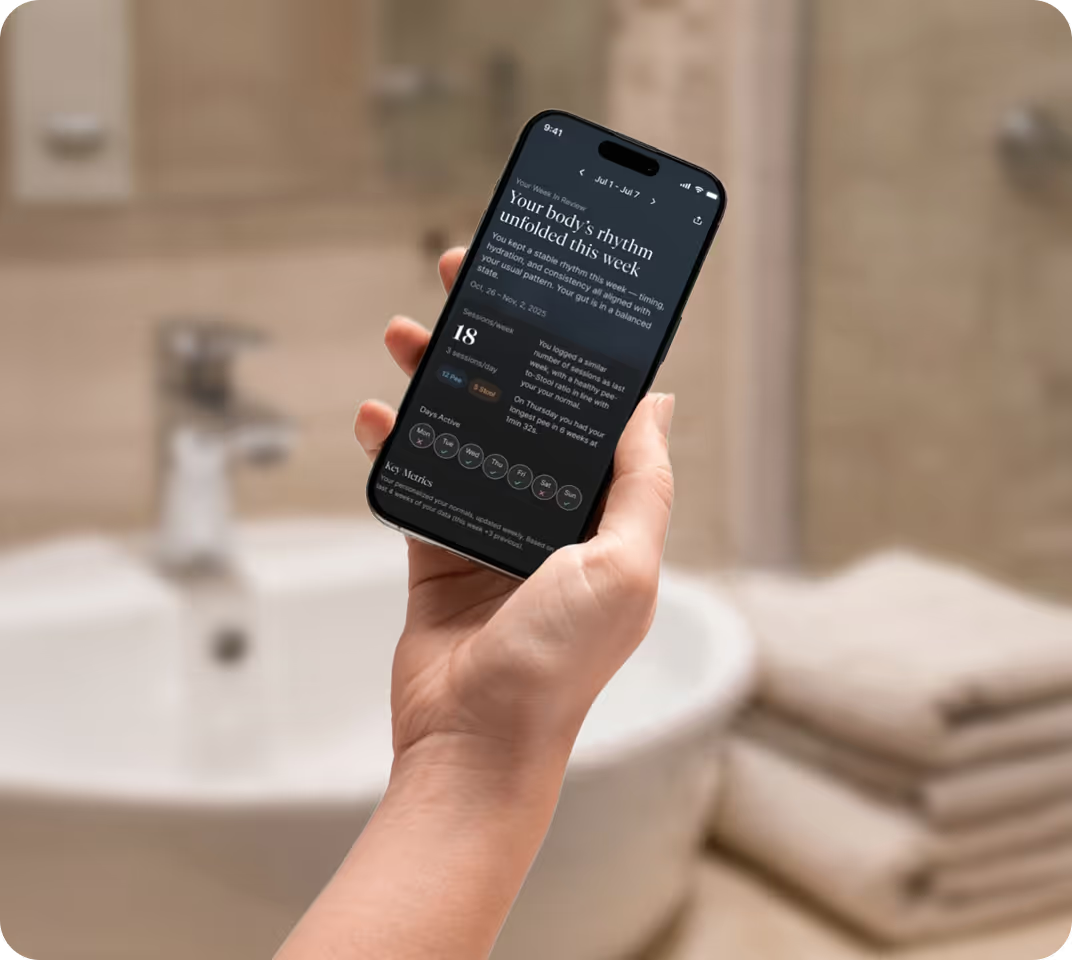
Your body files a report daily
You do your business. You see your data.
Every trip to the bathroom is data waiting to be read. Throne clips onto your toilet and reads every session automatically: stool consistency, frequency, hydration, and regularity, with no manual logging. So when something changes, you're comparing to your real baseline instead of guessing.
Why pee smells sweet sometimes
Pee is mostly water carrying waste, so the less water in it, the stronger and darker it gets. Concentrated pee smells stronger overall, but whether that makes it smell specifically sweet isn't clear.
A sweet or fruity smell usually comes from one of a few things:
- A food you ate. Fenugreek is the main one.
- Ketones, which your body makes when it burns fat instead of carbs, such as during fasting, a low-carb diet, or a long workout. One of them, acetone, smells fruity, a bit like nail polish remover.
- High blood sugar, though sugar in your pee has almost no smell of its own.
These are the less worrying causes, worth thinking through first. A sweet or fishy smell is just one of several smells pee can have, each with its own reasons. If a sweetish smell shows up with dark pee on a day you barely drank water, and it clears once you drink more, low fluids is a likely reason. Color is a rough guide here too, part of what your pee can tell you.
Could it be diabetes?
Maybe, but the smell alone won't tell you.
The old name "diabetes mellitus" means honey-sweet, because doctors once spotted it by sweet-tasting pee that drew ants. But that was taste, not smell. Sugar itself has almost no odor, so a sweet smell can't confirm or rule out diabetes. The fruity smell people link to diabetes actually comes from acetone, and it shows up on the breath during serious ketosis, not in the pee.
What's worth acting on is the smell plus other signs: being very thirsty, peeing a lot more than usual, losing weight without trying, or feeling worn out. If that sounds like you, see a doctor and get a blood test. A doctor can check your blood sugar and, if needed, an A1C (a longer-term sugar level). A urine test can add information, but on its own it can't confirm or rule out diabetes.
When it smells like maple syrup
A clear maple-syrup or burnt-sugar smell has two very different causes, so it's worth its own answer. Like a fishy smell, a syrupy one has specific causes rather than a dozen vague ones.
One cause is food. Fenugreek holds a compound called sotolon that smells like maple syrup, and eating a lot of it can pass that smell into your pee. It's strong enough that fenugreek tea has caused false alarms in newborn testing. Food is one clear cause, but there's no good data on how often it explains adult cases.
The rare cause is maple syrup urine disease. It's an inherited condition that almost always shows up in newborns and is caught by newborn screening. Milder forms can sometimes appear later. If you're an adult who feels fine and just noticed the smell, this is very unlikely, but no smell can rule it in or out. If a baby's pee or earwax smells like syrup, call a pediatrician.
When it's an emergency
If someone has vomiting, belly pain, fast or heavy breathing, confusion, weakness, or signs of being very dehydrated, especially if they have diabetes or take an SGLT2 medication (a common diabetes drug), get emergency care now.
Go to the ER or call emergency services, not an urgent-care clinic, which may not be set up to handle it. A fruity breath smell may or may not be there, and if it's absent, that does not mean it's safe. This can even happen when blood sugar looks close to normal.
But to be clear, a faint sweet smell with none of these signs is not this.
What actually tells you the cause
Notice the pattern here: the smell starts the question, but something else answers it. Food smells fade as the food clears. Low-fluid smells fade when you drink. Diabetes is confirmed or ruled out by a blood test. The smell itself never gives the answer.
So watch it over a few days: does it keep coming back, and does anything come with it?
This is where a record beats memory. Throne can't smell anything or test your pee, but it logs how often you go, so a real change stands out against your normal. Note the days you catch the smell, and you'll have a clear timeline to show a doctor instead of a vague memory. Throne's gut health coach can help you connect what you're seeing. It won't name the cause, and it doesn't replace a test.
When to see a doctor
A short-lived smell after certain foods or on a low-water day often passes on its own. See a doctor if:
- The smell keeps coming back with no food explanation, or it worries you
- It comes with strong thirst, peeing much more, weight loss, or lasting tiredness. Book a visit and ask about a blood sugar test.
- You have diabetes. Follow your sick-day plan, check your sugar and ketones as instructed, and get care quickly if the smell comes with feeling ill.
- A baby's pee or earwax smells like maple syrup. Call a pediatrician.
Get emergency care now, not later, if there's vomiting, belly pain, fast or heavy breathing, confusion, or severe dehydration, especially in someone with diabetes or on an SGLT2 medication.
Common questions
Q: Does sweet-smelling pee mean I have diabetes?
A: Not on its own. Sugar in pee has almost no smell, so you can't tell by odor. Diabetes usually brings other signs, like strong thirst, peeing more, or losing weight. A blood test is the way to know.
Q: Can food or fasting cause it?
A: Yes. Fenugreek can make pee smell like maple syrup. Fasting, low-carb diets, and long workouts raise acetone, which smells fruity, though it's easier to notice on the breath. These can be normal when nothing else is wrong.
Q: My pee smells like maple syrup. Should I worry?
A: Food is one cause, fenugreek being the clearest. Maple syrup urine disease is rare, shows up in newborns, and is caught by screening. For a healthy adult it's very unlikely, but smell can't confirm it either way. For a baby, call a pediatrician.
Q: Can being low on fluids do this?
A: Low water makes pee smell stronger overall. Whether it makes it smell sweet isn't clear. If it goes with dark pee and clears after you drink, that's a likely reason.
Exclusive Reader Offer
Take $50 off your Throne
Throne is the first hands-free sensor that automatically tracks your gut health, hydration, and urinary health, with every flush. Drop your email and we’ll send your $50-off code.
- Hands-free
- HSA/FSA eligible (saves 30%)
- 30-Day Battery
- 6 Private Profiles
Claim your $50
Thank you! Your submission has been received!
Oops! Something went wrong while submitting the form.
Kostelnik, S. B., Davy, K. P., Hedrick, V. E., Thomas, D. T., & Davy, B. M. (2021). The validity of urine color as a hydration biomarker within the general adult population and athletes: A systematic review. Journal of the American College of Nutrition, 40(2), 172-179. https://pubmed.ncbi.nlm.nih.gov/32330109/
Ghimire, P., & Dhamoon, A. S. (2023). Ketoacidosis. In StatPearls. StatPearls Publishing. https://www.ncbi.nlm.nih.gov/books/NBK534848/
Hassan, S. A., & Gupta, V. (2024). Maple syrup urine disease. In StatPearls. StatPearls Publishing. https://www.ncbi.nlm.nih.gov/books/NBK557773/
Sewell, A. C., Mosandl, A., & Böhles, H. (1999). False diagnosis of maple syrup urine disease owing to ingestion of herbal tea. New England Journal of Medicine, 341(10), 769. https://pubmed.ncbi.nlm.nih.gov/10475807/
Umpierrez, G. E., Davis, G. M., ElSayed, N. A., Fadini, G. P., Galindo, R. J., Hirsch, I. B., Klonoff, D. C., McCoy, R. G., Misra, S., Gabbay, R. A., Bannuru, R. R., & Dhatariya, K. K. (2024). Hyperglycemic crises in adults with diabetes: A consensus report. Diabetes Care, 47(8), 1257-1275. https://diabetesjournals.org/care/article/47/8/1257/156808/Hyperglycemic-Crises-in-Adults-With-Diabetes-A
American Diabetes Association Professional Practice Committee. (2026). 2. Diagnosis and classification of diabetes: Standards of Care in Diabetes, 2026. Diabetes Care, 49(Supplement 1), S27-S49. https://diabetesjournals.org/care/article/49/Supplement_1/S27/163926/2-Diagnosis-and-Classification-of-Diabetes
DISCLAIMER: This content is for informational purposes only and is not intended as medical advice. Throne products are not medical devices and are not intended to diagnose, treat, cure, or prevent any disease. Consult your physician with any health-related questions.