
What Does (And Doesn't) Happen When You Hold In Your Poop
Holding in a poop for a little while isn't usually a cause for concern, but there are circumstances where you might want to mention it to your doctor.
Written by
Thomas Nelson
Published on
August 5, 2026

Overview
Holding in a poop for a little while isn't usually a cause for concern, but there are circumstances where you might want to mention it to your doctor.


Your body doesn't expect you to drop everything the second you feel the urge to poop. The rectum is built to store stool, and the muscles around the anus give you voluntary control over when you go.
So holding it until you get home or finish a meeting isn't automatically bad. The problem is when "not now" becomes your default. Repeatedly ignoring the urge can contribute to constipation, making bowel movements harder, less comfortable, and easier to avoid the next time. Holding your poop once is a scheduling decision; holding it repeatedly can become a constipation habit.
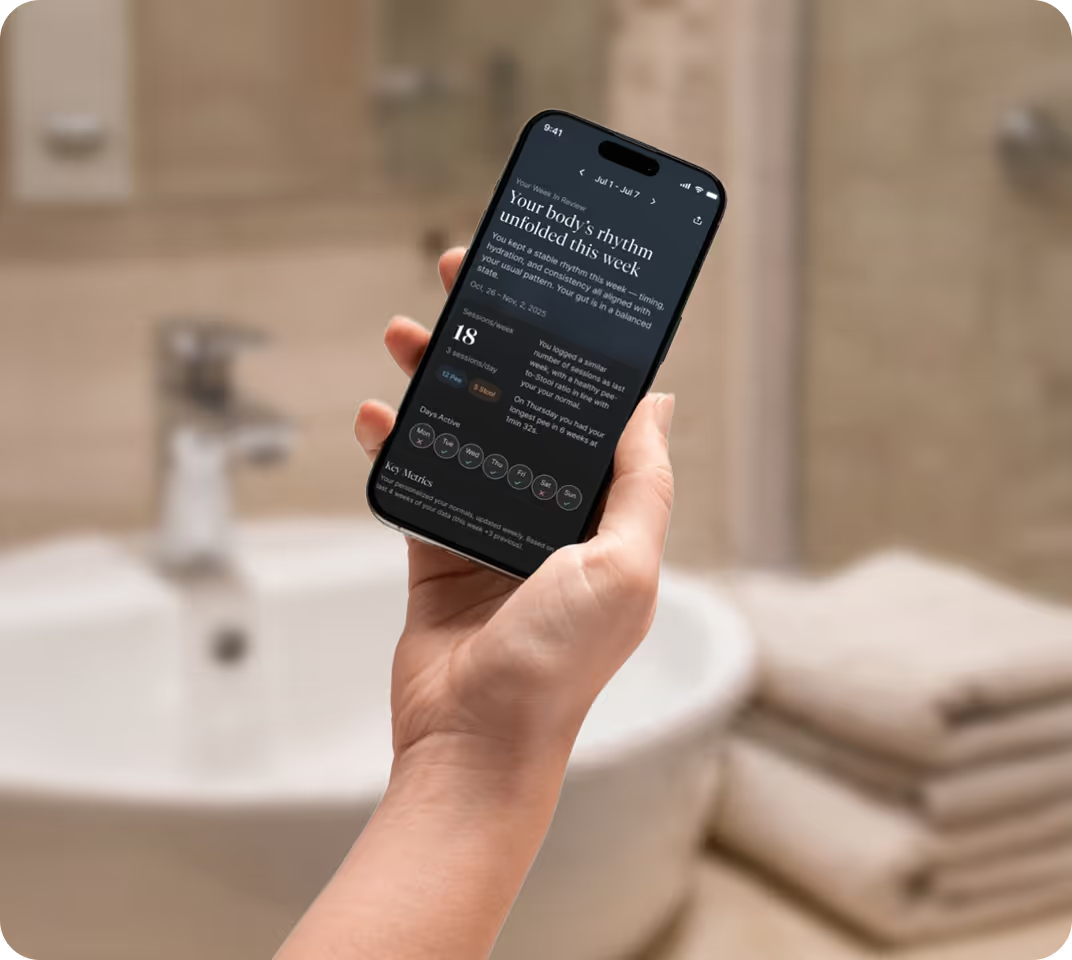
Your body files a report daily
You do your business. You see your data.
Every trip to the bathroom is data waiting to be read. Throne clips onto your toilet and reads every session automatically: stool consistency, frequency, hydration, and regularity, with no manual logging. So when something changes, you're comparing to your real baseline instead of guessing.
What happens when you hold it
When stool moves into your rectum, it stretches the rectal walls, and that stretch creates the urge to go. The internal anal sphincter, which you don't control, relaxes automatically. The external anal sphincter and pelvic-floor muscles are under your voluntary control, and they're what let you clamp down and wait until the time and place are right, while the rectum holds onto the stool until you decide it's a good moment.
That storage-and-hold ability is a normal part of continence, not a malfunction or a cause for concern. And no, the stool doesn't get "sucked back up into your colon." What changes is how strongly you feel it.
Why does the urge sometimes go away?
You've probably noticed that if you ignore the urge, it fades after a few minutes. The rectal wall relaxes to accommodate what it's holding, reducing the sensation even though nothing has been passed. The urge may return with a later colonic contraction or further rectal filling.
The urge fading means your rectum adapted to the load. The stool hasn't disappeared or been pulled back into the colon; the rectum has temporarily accommodated it. And a single ignored urge doesn't permanently weaken the signal or damage the nerves. Altered rectal sensation shows up in some people with longstanding constipation or defecatory disorders, not from waiting through one meeting.
Is it bad to hold it once?
Occasionally postponing until you find a bathroom is just continence doing its job. There's no useful countdown, no "two hours is safe, three is dangerous." The better questions are about the pattern:
- Are you briefly postponing, or suppressing the urge over and over?
- Is your stool turning hard or painful?
- Are you straining when you finally go?
- Are you routinely avoiding bathrooms out of fear, cleanliness, or privacy?
- Has your bowel frequency changed?
And one delayed bowel movement doesn't flood your body with "toxins"; that isn't how it works.
What if you do it all the time?
This is where holding it stops being harmless. Habitually ignoring the urge is a recognized contributor to constipation. Once that pattern develops, stool may move more slowly through the colon and become harder or drier, making it more difficult to pass.
Then it becomes a loop: you postpone, the stool hardens, the next trip hurts or takes real straining, and that makes you even less eager next time, so you postpone again. Over time, putting off bowel movements can feed a cycle of worsening constipation, with complications such as fecal impaction and, less commonly, rectal prolapse, consequences of an ongoing pattern, not of waiting out one inconvenient moment.
Can holding it cause hemorrhoids or a fissure?
Usually not directly. Repeatedly postponing bowel movements may contribute indirectly if it becomes part of a constipation pattern involving harder stool and straining. Those are more clearly associated with hemorrhoids, while passing a large or hard stool can contribute to an anal fissure.
Why people hold it
Often it isn't really a choice about your body. People wait because they're at work or school, the bathroom is dirty or lacks privacy, they're traveling, they don't want to interrupt a task, a past bowel movement hurt, or they feel anxious about pooping away from home.
None of that is something to feel bad about. And sometimes the barrier is structural, not a lack of willpower: not everyone has a safe, private, or accessible bathroom when the urge hits. "Just listen to your body" isn't useful advice if the environment won't cooperate.
What to do about it
Delay when you have to, but take the next reasonable chance rather than suppressing the urge all day. When you get to a toilet, don't rush or force it. Give yourself privacy and a few unhurried minutes. Some people find a footstool and a more squat-like position make passing stool more comfortable, though it doesn't improve emptying for everyone. Keep stool reasonably soft through steady fiber, fluids, and movement rather than trying to "make up" for holding it with a huge dose of water or a laxative.
If ignoring the urge has become a habit, it helps to notice when and why you postpone and protect a predictable window, ideally after a meal, when the colon is naturally more active. Don't camp out on the toilet, though: a few relaxed minutes is plenty. The goal isn't to poop on command. It's to stop training yourself to say "later" every time your body says "now."
Where Throne fits
Throne records the timing, frequency, and form of your bowel movements, which can show whether regularly putting the urge off lines up with fewer trips or harder stool. It can't know when you first felt the urge or why you waited, so that part is still yours to add. It's a way to see whether an occasional scheduling problem has quietly become a recurring one.
When to see a doctor
Arrange a visit if you routinely avoid going because it hurts, your stool is consistently hard, you regularly strain or feel unfinished, constipation is persistent or interfering with daily life, you rely on laxatives to go, you notice leakage around retained stool, you rarely feel the urge despite going infrequently, or you're losing weight without trying.
Seek prompt care for constipation that comes with rectal bleeding or black stool, constant or severe abdominal pain, vomiting, fever, an inability to pass gas, or marked abdominal swelling or feeling seriously unwell.
Frequently asked questions
Q: Is it bad to hold your poop? A: Occasionally waiting until you find a bathroom is part of normal bowel control. Repeatedly ignoring the urge can contribute to constipation and harder, more difficult bowel movements.
Q: How long can you safely hold your poop? A: There's no universal safe number of hours. Brief postponement is different from suppressing the urge over and over, day after day.
Q: Can holding your poop cause hemorrhoids? A: Not usually from one time. Repeated postponing may contribute indirectly if it leads to harder stool, constipation, and straining.
Q: What if I hate public bathrooms? A: Use the next bathroom where you feel reasonably safe rather than holding every urge until you're home. If bathroom anxiety regularly causes constipation or disrupts your life, it's worth addressing directly.
Exclusive Reader Offer
Take $50 off your Throne
Throne is the first hands-free sensor that automatically tracks your gut health, hydration, and urinary health, with every flush. Drop your email and we’ll send your $50-off code.
- Hands-free
- HSA/FSA eligible (saves 30%)
- 30-Day Battery
- 6 Private Profiles
Claim your $50
Thank you! Your submission has been received!
Oops! Something went wrong while submitting the form.
Mawer, S., & Alhawaj, A. F. (2023). Physiology, defecation. In StatPearls. StatPearls Publishing. https://www.ncbi.nlm.nih.gov/books/NBK539732/
National Institute of Diabetes and Digestive and Kidney Diseases. Symptoms & causes of constipation. https://www.niddk.nih.gov/health-information/digestive-diseases/constipation/symptoms-causes
Malone, J. C., & Thavamani, A. (2023). Physiology, gastrocolic reflex. In StatPearls. StatPearls Publishing. https://www.ncbi.nlm.nih.gov/books/NBK549888/
Rao, S. S. C., & Patcharatrakul, T. (2016). Diagnosis and treatment of dyssynergic defecation. Journal of Neurogastroenterology and Motility, 22(3), 423-435. https://www.jnmjournal.org/journal/view.html?uid=1145&vmd=Full
Merck Manual Consumer Version. Constipation in adults. https://www.msdmanuals.com/home/digestive-disorders/symptoms-of-digestive-disorders/constipation-in-adults
Anal fissures. In StatPearls. StatPearls Publishing. https://www.ncbi.nlm.nih.gov/books/NBK526063/
DISCLAIMER: This content is for informational purposes only and is not intended as medical advice. Throne products are not medical devices and are not intended to diagnose, treat, cure, or prevent any disease. Consult your physician with any health-related questions.