
Why Is My Poop Foamy? What Bubbly Stool Can And Can't Tell You
“Foamy poop" is a description, not a diagnosis. Frothy stool can be caused by a number of things, most of which are harmless. But there are some circumstances where you should call your doctor.
Written by
Thomas Nelson
Published on
July 28, 2026

Overview
“Foamy poop" is a description, not a diagnosis. Frothy stool can be caused by a number of things, most of which are harmless. But there are some circumstances where you should call your doctor.


You looked in the bowl, saw foamy or frothy poop, and now you're wondering what it means.
"Foamy poop" is a description, not a diagnosis. Some people mean bubbles in loose stool. Others mean an oily, greasy look, or visible mucus, or just bubbles in the toilet water. Those are different appearances with different causes, and the look alone can't tell you which you have. So the useful first step isn't finding "the cause of foam." It's figuring out what you're actually looking at.
This walks through the versions people usually mean, what each one can point to, and when any of it is worth a doctor.
Your body files a report daily
You do your business. You see your data.
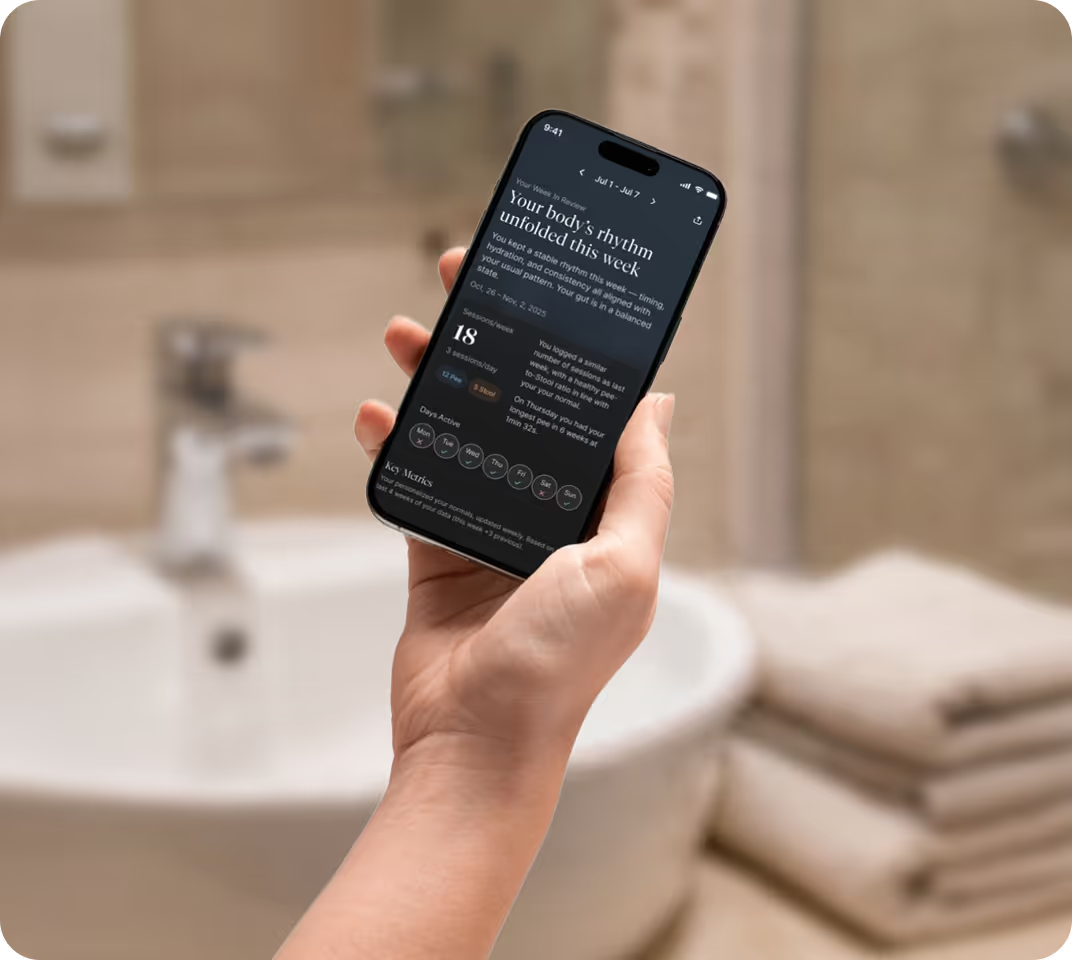
Every trip to the bathroom is data waiting to be read. Throne clips onto your toilet and reads every session automatically: stool consistency, frequency, hydration, and regularity, with no manual logging. So when something changes, you're comparing to your real baseline instead of guessing.
First, look at where the bubbles are
Before reading anything into the stool itself, notice where the foam is.
Foam that shows up only after the stool hits the toilet water, or mainly where urine hits the water, may not be coming from your poop at all. Toilet cleaner or soap can froth on contact. Urine can look foamy on its own. The signal to look for is bubbles or texture in the stool itself, not effervescence in the bowl. Sorting that out first saves you from blaming your poop for your plumbing.
If it's bubbles in loose stool
If what you're seeing is genuinely bubbles in loose or mushy stool, one plausible contributor is food that didn't get fully absorbed.
When your small intestine doesn't fully absorb a carbohydrate, it passes into your colon, where gut bacteria ferment it and produce gas and other products. A study of carbohydrate malabsorption showed that unabsorbed carbs and their fermentation products draw water into the stool and loosen it. This isn't a proven explanation for the specific look people call foamy, which hasn't been studied well enough to treat as a diagnostic sign. So take this as one possible reason for bubbly diarrhea, not a diagnosis.
The usual triggers are ordinary foods. Lactose, if you don't digest it well. The group of fermentable carbs called FODMAPs. Sugar alcohols like sorbitol and xylitol in sugar-free gum and candy. A big jump in fiber can do it too. Each of these can cause gas, bloating, and loose stool, though none reliably produces foam. If a particular food does it to you, easing off tends to settle things, and a one-off after a fermentable meal, with nothing else going on, usually isn't worth worrying about.
If it's oily or greasy
A different look points somewhere more specific, and it's the one worth taking seriously.
If the stool is oily or greasy, bulky, foul-smelling, and hard to flush, that points to fat your gut didn't absorb, called steatorrhea. Some clinical descriptions actually use "frothy" for this fatty pattern, which is part of why "foamy" is such a slippery word. It can be a sign of a condition affecting the pancreas, bile, or small intestine, such as pancreatic insufficiency or untreated celiac disease, and it often comes with weight loss, gas, or diarrhea.
Pale or clay-colored stool can point to a bile problem and sometimes travels with this, but pale on its own isn't the same as fatty. And floating by itself is weak evidence, since gas makes stool float too. Greasy, foul-smelling, hard-to-flush stool that repeatedly floats is more suggestive of fat malabsorption than floating alone.
If that pattern keeps showing up, it's worth a doctor's visit, because the fix depends on the cause. We go deep on it in our guide to oily, fatty stool, and it's also why floating poop can mean two different things depending on what comes with it.
If diarrhea follows an exposure: giardia
If loose, smelly stool starts after a specific exposure, one infection is worth knowing about.
Giardia is a parasite you pick up from contaminated water or food, untreated freshwater, or close contact, so campers, hikers, travelers, and people around diapered kids are more at risk. It commonly causes diarrhea, a lot of gas, bloating, cramps, and smelly, greasy stool that may float, usually starting one to two weeks after exposure and often lasting a few weeks. Blood in the stool is uncommon with giardia, since the parasite generally doesn't invade the gut wall, though that's a soft clue rather than a way to rule other things in or out.
Giardia can temporarily impair how you digest lactose, and some people keep reacting to dairy or having gut symptoms for a while after the infection itself has cleared, which can be confusing. Some cases resolve without medication, but persistent or disruptive symptoms are worth testing, because effective prescription treatments exist. Testing is done on a stool sample, sometimes more than one, since the parasite isn't shed in every sample.
A note on mucus and stress
Small amounts of mucus in stool can be normal, and whitish mucus is often reported with IBS. Stress can worsen IBS symptoms like diarrhea, gas, and mucus, and that can coincide with a stool someone would describe as foamy. But foam itself isn't a recognized marker of stress or IBS, so it's the overall pattern, not the froth, that's worth paying attention to.
What matters more than the foam
Across all of these, the appearance is a weak signal by itself. One isolated change is generally less informative than a recurring pattern, especially when the pattern includes diarrhea, greasy stool, pain, weight loss, or a relevant exposure. That's the thing that's hard to judge from memory of what the bowl looked like last week.
Throne records your stool form and how often you go, so a recurring shift stands out against your baseline and you note the foamy days yourself. It can't see foam or diagnose anything. It gives you a timeline to bring to a clinician instead of a guess.
When to see a doctor
It's worth a visit if a change persists or keeps returning and comes with any of these:
- Greasy, foul-smelling stool that's hard to flush, or persistently pale stool
- Weight loss you didn't intend, or ongoing abdominal pain
- Recent travel or exposure to untreated water
- Blood in your stool, fever, or signs of dehydration from diarrhea
Get care promptly for severe abdominal pain, a high fever, or blood in your stool.
Frequently asked questions
Q: Is foamy poop serious?
A: Often not on its own, especially as a one-off. It's more worth checking when a change keeps returning or comes with greasy or pale stool, weight loss, abdominal pain, or blood.
Q: What foods make poop foamy?
A: No food reliably produces foam, but foods your gut ferments a lot of can cause gas and loose stool: dairy if you don't digest lactose well, high-FODMAP foods, sugar alcohols like sorbitol and xylitol in sugar-free gum and candy, and big jumps in fiber.
Q: Can stress cause foamy poop?
A: Stress can worsen IBS symptoms like diarrhea, gas, and mucus, which may coincide with a look someone calls foamy. But foam itself isn't a recognized sign of stress or IBS.
Q: How is bubbly poop different from greasy poop?
A: Bubbles in loose stool may come from fermented food and are often harmless. Oily, greasy, bulky, foul-smelling stool points more toward unabsorbed fat, which is more likely to need a workup. Noticing which one you have is the useful part.
Exclusive Reader Offer
Take $50 off your Throne
Throne is the first hands-free sensor that automatically tracks your gut health, hydration, and urinary health, with every flush. Drop your email and we’ll send your $50-off code.
- Hands-free
- HSA/FSA eligible (saves 30%)
- 30-Day Battery
- 6 Private Profiles
Claim your $50
Thank you! Your submission has been received!
Oops! Something went wrong while submitting the form.
Fernández-Bañares, F. (2022). Carbohydrate maldigestion and intolerance. Nutrients, 14(9), 1923. https://pubmed.ncbi.nlm.nih.gov/35565890/
Hammer, H. F., Fine, K. D., Santa Ana, C. A., Porter, J. L., Schiller, L. R., & Fordtran, J. S. (1990). Carbohydrate malabsorption: its measurement and its contribution to diarrhea. Journal of Clinical Investigation, 86(6), 1936-1944. https://pubmed.ncbi.nlm.nih.gov/2254453/
Azer, S. A., & Sankararaman, S. (2023). Steatorrhea. In StatPearls. StatPearls Publishing. https://www.ncbi.nlm.nih.gov/books/NBK541055/
Stephen, T., Tobin, E. H., & Juergens, A. L. (2025). Giardiasis. In StatPearls. StatPearls Publishing. https://www.ncbi.nlm.nih.gov/books/NBK513239/
DISCLAIMER: This content is for informational purposes only and is not intended as medical advice. Throne products are not medical devices and are not intended to diagnose, treat, cure, or prevent any disease. Consult your physician with any health-related questions.