
Why Is My Poop Never Solid? 6 Causes To Test For
Loose or mushy stool for months is a pattern worth understanding. What chronically unformed poop points to and what tests to ask for.
Written by
Thomas Nelson
Published on
August 11, 2026
Overview
Loose or mushy stool for months is a pattern worth understanding. What chronically unformed poop points to and what tests to ask for.


“Why is my poop never solid?” The word doing the work in that question is "never."
You're not describing a bad night after a curry or even a stressful week with some intense bathroom runs. You're describing something that's been true for months, maybe years, and after long enough it can be hard to remember what your baseline even used to be.
It's easy not to bring this up, because it doesn't feel dramatic enough to count as a problem. It's not painful. You're not running to the bathroom in an emergency. It's just never quite right.
But if your bowel movements just don't feel right, it's worth understanding why.
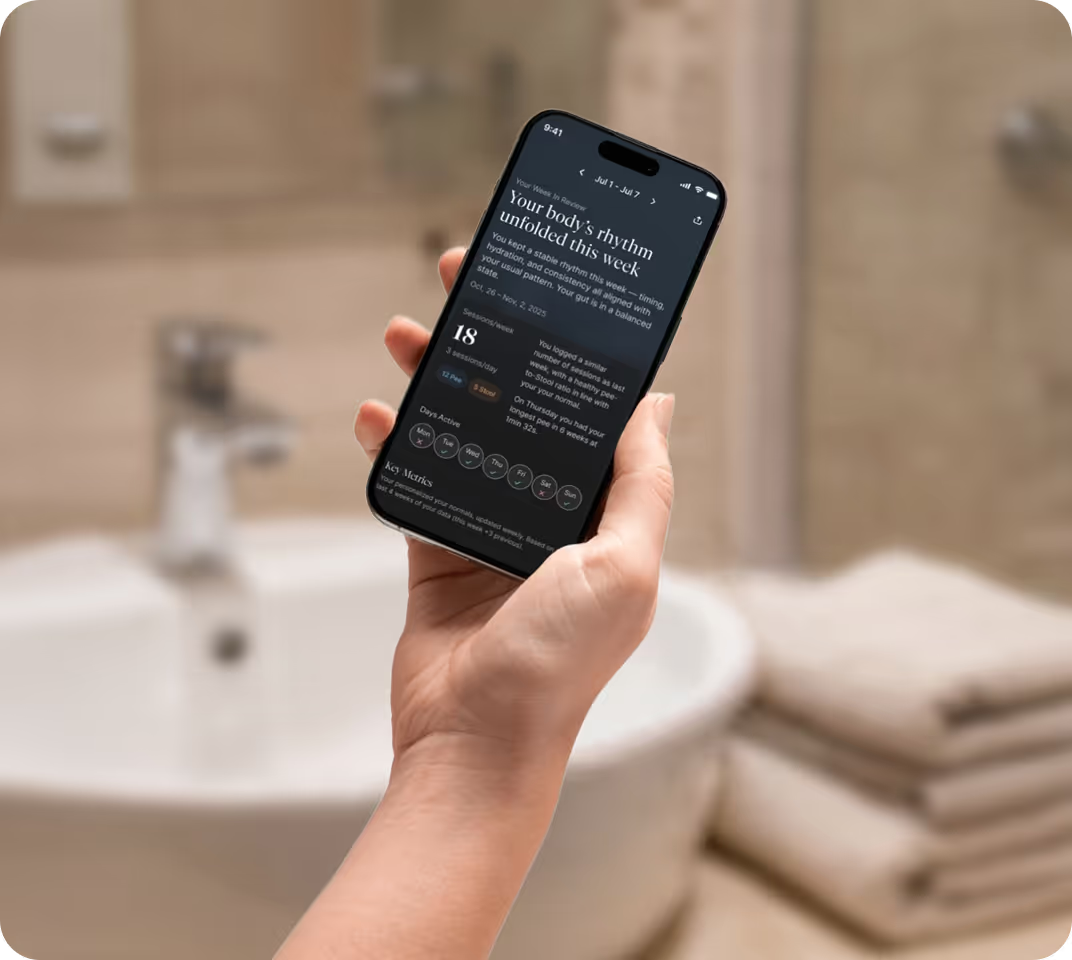
Your body files a report daily
You do your business. You see your data.
Every trip to the bathroom is data waiting to be read. Throne clips onto your toilet and reads every session automatically: stool consistency, frequency, hydration, and regularity, with no manual logging. So when something changes, you're comparing to your real baseline instead of guessing.
What "never solid" actually describes
Stool consistency runs on a spectrum, and the Bristol scale is the shorthand clinicians use for it. The middle of the scale is the smooth, formed sausage most people picture. Below that sit soft blobs with clear edges (type 5), then fluffy mushy pieces with ragged edges (type 6), then fully liquid (type 7).
If you're somewhere in the type 5 to 6 range rather than the watery end, that's often why the problem goes unmentioned. It doesn't feel like diarrhea, so it doesn't get called diarrhea, so it doesn't get investigated.
Chronic diarrhea is defined by stool consistency rather than frequency, covering recurrent loose or watery stools lasting more than four weeks, and it affects an estimated 6% to 7% of US adults. So if by "never solid" you mean recurrent loose or mushy stools for more than four weeks, that falls within how chronic diarrhea is commonly evaluated, even if you aren't going more often.
Sources vary on the cutoff, and you'll see two weeks used as well. Four weeks is the more common threshold in gastroenterology guidelines, and the difference matters less than it looks: neither is a waiting period you're supposed to serve before asking about it.
Where soft-but-formed stool sits is also genuinely fuzzy. The mushier and less formed it gets, the more clearly it falls into the loose-stool category.
Either way, having the language matters. "My stools are a bit soft" and "I've had loose stools for eight months" can describe the same thing, but they land very differently in a medical conversation.
Things that can keep stool unformed
Something in your diet. Lactose, fructose, and sugar alcohols like sorbitol and mannitol can pull water into the bowel when they aren't fully absorbed. Large amounts of caffeine or alcohol can also loosen stool, though through somewhat different mechanisms. These are reasonable places to look first, because you can often test the idea with a small, temporary change rather than a big elimination diet.
A medication you're taking. Drug-induced diarrhea accounts for up to 4% of chronic diarrhea cases. Magnesium-containing products, metformin and some other diabetes drugs, NSAIDs, certain antihypertensives, and antibiotics are among the ones known to do it. If the timing lines up with starting something, that's a lead.
A past stomach bug. Bowel habits can stay different for months after gastroenteritis, even after the infection itself is gone.
Gallbladder surgery. If your stools changed after your gallbladder came out, mention that specifically. Bile acid diarrhea can follow cholecystectomy, and it's easy to miss unless someone thinks to look for it. One UK audit found that very few post-surgery patients were tested, even though most of the small group selected for testing turned out to have it.
Conditions worth testing for
If this has been going on for months, there are several things worth checking before anyone shrugs and calls it "just IBS."
Some context on the numbers below: most come from patients referred to gastroenterology, meaning people whose symptoms were troubling enough to get sent on. Rates in that group run higher than they would in the general population, so read them as "worth checking," not as your odds.
IBS-D and functional diarrhea. These are diagnosed clinically rather than by a single defining test, and they're the most common noninfectious causes of chronic diarrhea. A functional diagnosis isn't a dead end: dietary approaches, medications, and gut-directed behavioral therapies all have evidence behind them.
Bile acid diarrhea. Studies have found this in roughly a quarter to a third of some IBS-D and chronic-diarrhea populations, though estimates vary depending on who was studied and how it was tested. The useful point is simpler: it's common enough to consider, often missed, and specifically treatable.
Carbohydrate malabsorption. Breath-test studies in secondary-care patients meeting IBS criteria have reported high rates of lactose and fructose malabsorption, though estimates vary enormously between studies. A positive breath test shows malabsorption, but it doesn't prove the carbohydrate is what's causing your symptoms.
Celiac disease. Celiac blood testing is a standard part of the evaluation for chronic watery diarrhea. One thing to know before you go: the test only works if you're still eating gluten, so cutting it out beforehand can turn a real result negative.
Microscopic colitis. Uncommon but not rare in this group, and the one most likely to be missed, because the colon often looks completely normal during colonoscopy. Diagnosis depends on biopsies being taken.
Pancreatic exocrine insufficiency. Less common than the others here, and it has a tell: stool that's greasy, pale, or hard to flush points toward fat malabsorption rather than plain looseness. Worth mentioning specifically if that fits.
Inflammatory bowel disease. IBD can cause chronically loose stool, particularly alongside bleeding, weight loss, nighttime symptoms, or abdominal pain. Fecal calprotectin or lactoferrin can help screen for intestinal inflammation.
What actually happens at the appointment
Most of this is less involved than people brace for.
They'll take a history first. How long, how often, what the stools look like, whether anything wakes you at night, what you eat, what you take, what changed and when. This is the part that goes badly when you're working from memory, and well when you're not.
Which is where Throne is useful. It sits in your toilet and records the form and timing of every bowel movement automatically, so "how often is it actually unformed" becomes something you look up rather than estimate. It won't tell you why. But months of real pattern data gives a clinician more to work with than "I think it's most of the time."
Bloodwork. Celiac serology is standard here, usually alongside a check for the antibody deficiency that can produce a false negative.
A stool collection kit to take home. Nothing about this happens in front of anyone. The samples usually get checked for inflammation, using calprotectin or lactoferrin, and for infections like Giardia. Inflammation markers are what separate a functional cause from something like IBD.
Possibly a bile acid test, and this one depends on where you live. The gold-standard scan, SeHCAT, isn't available in the United States, which is part of why bile acid diarrhea goes under-recognized here. US options include a serum C4 test or measured fecal bile acids, and in practice many clinicians use a trial of a bile acid binder instead. It's a reasonable thing to raise yourself if the picture fits.
A colonoscopy isn't automatic. If the first round doesn't explain things, it may come up, partly because microscopic colitis can only be found on biopsy.
Two things worth knowing about how this is meant to go. Your doctor is not trying to test for everything, and that's protective rather than dismissive: false positives lead to more invasive testing that carries its own risks. And this is the path for people without alarm features. Bleeding, weight loss, or signs of fat malabsorption means a different and usually faster route.
When it's worth moving faster
Contact a clinician sooner rather than later if loose stool comes with:
- Blood in the stool, or black, tarry stools
- Unintended weight loss
- Waking from sleep to have a bowel movement
- Fever, or unusual or persistent fatigue
- A family history of celiac disease, IBD, or colorectal cancer
Frequently asked questions
Q: Is it normal to never have a solid poop?
A: It can be someone's baseline, but recurrent loose or mushy stool for months is worth asking about. Soft-but-formed stool is more of a gray area; truly loose stool lasting more than four weeks falls into chronic-diarrhea territory.
Q: How long is too long?
A: Four weeks is the threshold most gastroenterology guidelines use to define chronic diarrhea, though you'll see two weeks cited as well. Either way it's a definition, not a waiting period, so anything with blood, weight loss, or nighttime symptoms warrants attention sooner.
Q: Could this just be my normal?
A: It could. Some people genuinely run soft and always have. That's more believable when it's been true your whole adult life, hasn't changed, and comes with nothing else. A shift from formed to unformed at some identifiable point is a different story.
Q: Does loose stool mean I have IBS?
A: Not on its own. IBS requires recurrent abdominal pain linked to bowel movements or to changes in stool frequency or form. Loose stool without pain points more toward functional diarrhea or one of the testable conditions above.
Q: Is there anything that actually firms up loose stool?
A: Soluble fiber is the most evidence-backed option to ask about. The ACG recommends soluble fiber such as psyllium over insoluble fiber like wheat bran for overall IBS symptoms, partly because it forms a gel rather than acting as a laxative. Be aware the guideline is candid that the evidence specifically for changing stool consistency is weaker than the evidence for symptoms overall, and none of this replaces working out the cause. Start low and increase slowly.
Q: Should I just cut out dairy?
A: If dairy seems connected to your symptoms, a short lactose-reduction trial is reasonable. Lactose-free dairy can test the idea without cutting dairy altogether. Give it a few weeks and note what happens. If nothing changes, that's useful information rather than a failed experiment, and it's worth bringing to an appointment rather than moving on to the next elimination.
Exclusive Reader Offer
Take $50 off your Throne
Throne is the first hands-free sensor that automatically tracks your gut health, hydration, and urinary health, with every flush. Drop your email and we’ll send your $50-off code.
- Hands-free
- HSA/FSA eligible (saves 30%)
- 30-Day Battery
- 6 Private Profiles
Claim your $50
Thank you! Your submission has been received!
Oops! Something went wrong while submitting the form.
Singh, P., Lee, A., Sheth, N. M., & Chey, W. D. (2026). Chronic, noninfectious diarrhea: A review. JAMA, 335(14), 1250-1262.
Smalley, W., Falck-Ytter, C., Carrasco-Labra, A., Wani, S., Lytvyn, L., & Falck-Ytter, Y. (2019). AGA clinical practice guidelines on the laboratory evaluation of functional diarrhea and diarrhea-predominant irritable bowel syndrome in adults (IBS-D). Gastroenterology, 157(3), 851-854.
Arasaradnam, R. P., Brown, S., Forbes, A., Fox, M. R., Hungin, P., Kelman, L., Major, G., O'Connor, M., Sanders, D. S., Sinha, R., Smith, S. C., Thomas, P., & Walters, J. R. F. (2018). Guidelines for the investigation of chronic diarrhoea in adults: British Society of Gastroenterology, 3rd edition. Gut, 67(8), 1380-1399.
Slattery, S. A., Niaz, O., Aziz, Q., Ford, A. C., & Farmer, A. D. (2015). Systematic review with meta-analysis: The prevalence of bile acid malabsorption in the irritable bowel syndrome with diarrhoea. Alimentary Pharmacology & Therapeutics, 42(1), 3-11.
Sadowski, D. C., Camilleri, M., Chey, W. D., Leontiadis, G. I., Marshall, J. K., Shaffer, E. A., Tse, F., & Walters, J. R. F. (2020). Canadian Association of Gastroenterology clinical practice guideline on the management of bile acid diarrhea. Journal of the Canadian Association of Gastroenterology, 3(1), e10-e27.
Andreyev, H. J. N., et al. (2022). A systematic review and meta-analysis on the prevalence of non-malignant, organic gastrointestinal disorders misdiagnosed as irritable bowel syndrome. Scientific Reports, 12, 1949.
Rates of bile acid diarrhoea after cholecystectomy: A multicentre audit. (2021). World Journal of Surgery, 45(8).
Lewis, S. J., & Heaton, K. W. (1997). Stool form scale as a useful guide to intestinal transit time. Scandinavian Journal of Gastroenterology, 32(9), 920-924.
DISCLAIMER: This content is for informational purposes only and is not intended as medical advice. Throne products are not medical devices and are not intended to diagnose, treat, cure, or prevent any disease. Consult your physician with any health-related questions.