
Green Poop and Stomach Pain: Common Causes and When to Call Your Doctor
Green stool and stomach pain don't always come from the same thing, so the pain and the symptoms around it matter more than the color. Let's walk through some of the common causes, and when to see a doctor.
Written by
Thomas Nelson
Published on
July 29, 2026

Overview
Green stool and stomach pain don't always come from the same thing, so the pain and the symptoms around it matter more than the color. Let's walk through some of the common causes, and when to see a doctor.


You've got green poop and stomach pain at the same time. That pairing must feel like it means something specific.
When green stool is also loose and comes with new cramping, nausea, or vomiting, the color and the discomfort may share a cause: things are moving through your gut quickly, and the gut upset driving that is also causing the cramps.
But green stool and stomach pain don't always come from the same thing, so the pain and the symptoms around it matter more than the color. This walks through when the two are likely linked, when they probably aren't, and when any of it is worth a doctor.
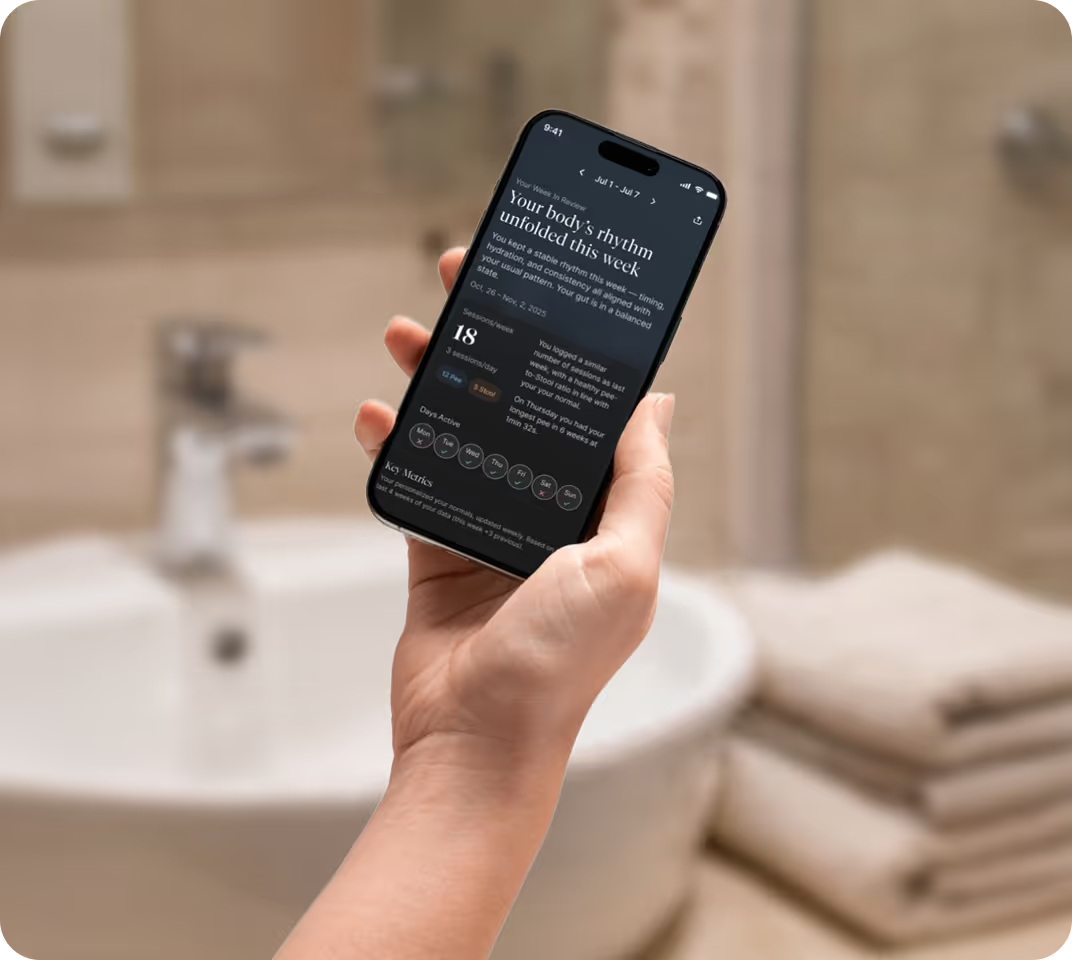
Your body files a report daily
You do your business. You see your data.
Every trip to the bathroom is data waiting to be read. Throne clips onto your toilet and reads every session automatically: stool consistency, frequency, hydration, and regularity, with no manual logging. So when something changes, you're comparing to your real baseline instead of guessing.
Why green poop and stomach pain can show up together
Bile is yellow-green when it enters the intestine. As it moves along, bilirubin in bile is transformed by gut bacteria into compounds that help give stool its usual brown color. When stool moves through quickly, as it can during diarrhea, the stool can stay green. Faster transit also tends to mean looser stool, and a gut that's irritated and moving fast can cramp.
So when green stool is loose and arrives with new cramps, the same diarrheal upset may explain both. Green stool without diarrhea or pain may simply be caused by something you ate, food coloring, iron supplements, or another harmless color change. Color is a weak signal on its own.
One common possibility: a stomach bug or food poisoning
When green, loose stool comes with cramps, one common possibility, especially if it started suddenly, is a stomach bug or a foodborne illness.
These tend to come on fairly fast and can bring cramping, nausea, vomiting, and sometimes a fever along with the diarrhea. The green may reflect the faster transit described above. Many improve on their own within a few days, and the main thing to watch isn't the color, it's dehydration from the fluid you're losing.
If you've recently traveled, eaten something questionable, or been around other people who were sick, that fits this picture. So can stress, which can speed the gut up and loosen stool, or alcohol, which can do the same.
What you can do for relief right now
For a straightforward stomach bug or foodborne upset, most of what helps is simple. The advice below is for adults.
Fluids come first. You lose water and salts with every loose stool, and replacing them is the main treatment. Sip steadily rather than gulping, since a lot at once can come back up. Water and other tolerated liquids may be enough for a mild case. An oral rehydration solution is the better choice when diarrhea is heavy or you're showing signs of dehydration, because it replaces water and salts in proportions built for absorption.
Eat when you feel able. You don't need to fast or follow a strict bland diet, since a restricted diet doesn't actually help, and once your appetite returns you can usually go back to your normal foods even if some diarrhea lingers. Choose whatever familiar foods sit comfortably. For a few days, it can help to go easy on alcohol, caffeine, very fatty foods, and large amounts of sugar, and on dairy if it seems to make things worse.
For the symptoms, a heating pad can take the edge off cramps. An immunocompetent adult with uncomplicated, watery diarrhea may be able to use an over-the-counter anti-diarrheal like loperamide after rehydrating, but don't use it if there's blood in your stool, a fever, or severe belly tenderness, or if a clinician has told you to avoid it, and it's never a substitute for replacing fluids.
Ask a pharmacist or doctor when you're unsure. If the pain is bad enough that you want strong painkillers, that's a reason to check with a doctor rather than push through. Rest as much as you need, since this kind of illness is draining.
When the pain is the part to take seriously
Stomach pain can be serious on its own, and when it is, the color of your stool doesn't make it any less so.
A passing bug usually brings general, crampy pain that eases between trips to the bathroom. What's different, and worth a doctor regardless of stool color, is pain that is severe, stays in one spot, keeps getting worse, or doesn't let up.
Sharp pain low on the right side, pain with a high fever, or pain alongside blood in the stool are not things to wait out or put down to green poop. Severe or localized abdominal pain can point to problems that need prompt care, so treat the pain as the signal and the color as a footnote.
Seeing the pattern
If this keeps happening, a record helps you tell a one-time bug from something that keeps coming back.
Throne timestamps your bathroom visits and tracks stool form and frequency, so a run of loose stools, or a pattern that returns, shows up against your usual instead of being something you try to remember. Sticking with tracking is what turns scattered off days into a timeline you can show a doctor. It can't diagnose anything or judge your pain, but it turns a vague sense that something has been off into a specific timeline.
When to see a doctor
Green stool with a mild, passing stomachache that clears in a day or two usually isn't a concern. Reach out to a doctor if:
- The pain is severe, stays in one place, or keeps getting worse
- There's blood in your stool, or it looks black and tarry
- You have a fever over 102°F (39°C), or you can't keep fluids down
- Diarrhea or pain lasts longer than two to three days without clearly improving, or keeps coming back
- You notice dehydration signs such as urinating much less than usual, very dark urine, a very dry mouth, dizziness when standing, or faintness.
Older adults, pregnant people, anyone with a weakened immune system, and those with a significant ongoing illness should check in sooner rather than waiting it out. Get care promptly for severe or localized abdominal pain, a high fever, or blood in the stool. Those deserve attention no matter what color your poop is.
What to expect at a doctor's visit
If you do go in, it's usually straightforward.
Expect questions first. A clinician will want to know how long it's lasted, what the stool looks like, whether there's blood or mucus, and what else is going on, like fever, vomiting, or weight loss. They'll likely ask about any recent travel, what you've eaten, anyone sick around you, your medications, and your health history. A record of your timeline answers a lot of that at once.
Then a brief exam. They'll usually check for signs of dehydration and press on your belly to find where it's tender and to rule out anything more urgent.
Testing is targeted, not automatic. For a short upset that's already improving, it often isn't needed. Stool testing is more likely when there's blood or mucus, fever, severe abdominal tenderness, symptoms that drag on, recent travel, a weakened immune system, or a possible outbreak or high-risk exposure. Blood tests may be used when dehydration or a whole-body illness is a concern. The visit is usually about assessing how severe things are, checking your hydration, and deciding whether any testing or treatment is needed.
Frequently asked questions
Q: Does green poop with stomach pain mean I have an infection?
A: Not necessarily. A stomach bug or foodborne illness is one common explanation when the green stool is also loose and the symptoms came on suddenly. But neither the color nor the combination can identify an infection. The pain and other symptoms, like fever, blood, or dehydration, are what tell you how seriously to take it.
Q: Can food make my poop green and give me a stomachache?
A: Green vegetables, food dye, and iron supplements can all turn stool green, much like other foods can change how your poop looks. Those color changes don't usually cause real pain, though a food could occasionally cause both a color change and some discomfort. If you have genuine stomach pain along with the color, an upset gut is worth considering too.
Q: How long should this last?
A: A green, crampy upset from a bug or food often settles within a couple of days. If diarrhea or pain lasts longer than two to three days without clearly improving, keeps returning, or gets worse, it's worth getting checked, and sooner if you're older, pregnant, or immunocompromised.
Q: Should I worry more about the green or the pain?
A: The pain. Green is rarely the concerning part on its own. Severe, worsening, or localized pain, or pain with fever or blood, is the thing to act on.
Exclusive Reader Offer
Take $50 off your Throne
Throne is the first hands-free sensor that automatically tracks your gut health, hydration, and urinary health, with every flush. Drop your email and we’ll send your $50-off code.
- Hands-free
- HSA/FSA eligible (saves 30%)
- 30-Day Battery
- 6 Private Profiles
Claim your $50
Thank you! Your submission has been received!
Oops! Something went wrong while submitting the form.
Hall, B., Levy, S., Dufault-Thompson, K., Arp, G., Zhong, A., Ndjite, G. M., Weiss, A., Braccia, D., Jenkins, C., Grant, M. R., Abeysinghe, S., Yang, Y., Jermain, M. D., Wu, C. H., Ma, B., & Jiang, X. (2024). BilR is a gut microbial enzyme that reduces bilirubin to urobilinogen. Nature Microbiology, 9(1), 173-184. https://pubmed.ncbi.nlm.nih.gov/38172624/
Lewis, S. J., & Heaton, K. W. (1997). Stool form scale as a useful guide to intestinal transit time. Scandinavian Journal of Gastroenterology, 32(9), 920-924. https://pubmed.ncbi.nlm.nih.gov/9299672/
Stuempfig, N. D., Tobin, E. H., & Seroy, J. (2025). Viral gastroenteritis. In StatPearls. StatPearls Publishing. https://www.ncbi.nlm.nih.gov/books/NBK518995/
National Institute of Diabetes and Digestive and Kidney Diseases. (2018). Treatment of viral gastroenteritis ("stomach flu"). https://www.niddk.nih.gov/health-information/digestive-diseases/viral-gastroenteritis/treatment
Shane, A. L., Mody, R. K., Crump, J. A., Tarr, P. I., Steiner, T. S., Kotloff, K., Langley, J. M., Wanke, C., Warren, C. A., Cheng, A. C., Cantey, J., & Pickering, L. K. (2017). 2017 Infectious Diseases Society of America clinical practice guidelines for the diagnosis and management of infectious diarrhea. Clinical Infectious Diseases, 65(12), e45-e80. https://academic.oup.com/cid/article/65/12/e45/4557073
Centers for Disease Control and Prevention. (2024). Symptoms of food poisoning. https://www.cdc.gov/food-safety/signs-symptoms/index.html
DISCLAIMER: This content is for informational purposes only and is not intended as medical advice. Throne products are not medical devices and are not intended to diagnose, treat, cure, or prevent any disease. Consult your physician with any health-related questions.